What is a Progressive Die?
Definition and Functionality
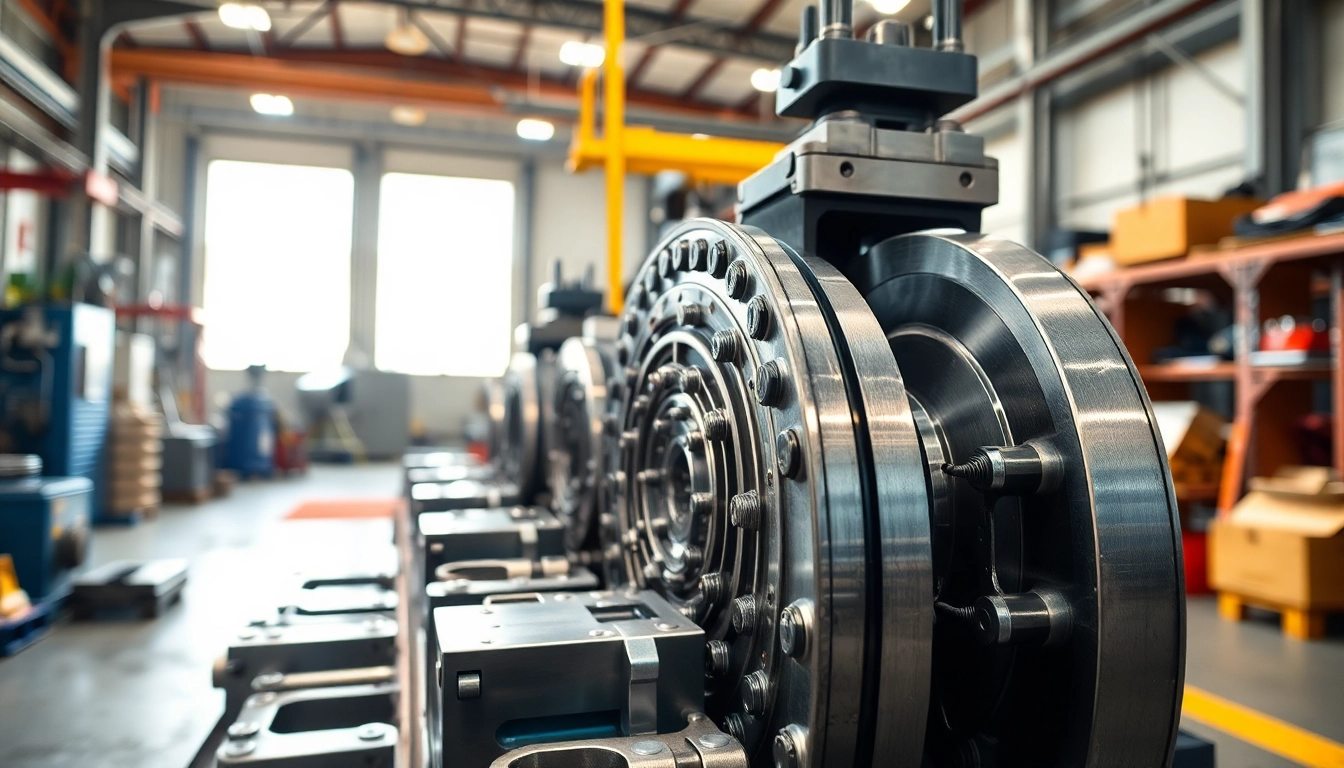
A progressive die is a specialized tool used in manufacturing processes to sequentially form and shape metal sheets through a series of stations. Each station performs a different operation, which may include cutting, bending, or forming, effectively creating a finished part in a step-by-step manner as the sheet metal progresses through the die. The main advantage of progressive dies is their ability to produce high volumes of components with minimal material waste, leading to cost savings and increased efficiency.
In essence, the Progressive Die functions as an assembly line within a single die, allowing manufacturers to achieve complex geometries while implementing processes that would be cumbersome or impossible with other die types, such as single-stage dies.
How Progressive Dies Work
The operation of a progressive die is relatively straightforward yet highly effective. The process begins with feeding a strip of metal into the die, which holds multiple stations. Each station is engineered to perform specific tasks—such as punching, notching, or forming—on the metal strip as it moves through the die. This is typically achieved using a press that applies force to the die, pushing the metal into the closed die cavities at each station.
The key here is that with each stroke of the press, the strip advances incrementally through the die, ensuring that each operation is completed in a streamlined manner. This not only enhances the speed of production but also means that large quantities of end-products can be generated with considerable consistency in terms of dimensional accuracy and finish quality.
Comparison with Other Die Types
To fully appreciate the advantages of progressive dies, it is crucial to compare them with other die types commonly used in sheet metal fabrication, such as single-stage dies and compound dies. While single-stage dies can perform a single operation per stroke, progressive dies integrate multiple operations, enabling a single tool to replace numerous die sets.
Compound dies, on the other hand, can operate on a similar principle but may not allow for the progressive movement of material through multiple stages effectively. This often leads to inefficiencies in production time. Additionally, progressive dies often provide better utilization of material with fewer scrap losses compared to both single-stage and compound dies, especially in high-volume production runs.
Benefits of Using Progressive Dies
Efficiency in Production
The undeniable pace of manufacturing has been a significant driving force behind the adoption of progressive dies across various industries. Progressive dies allow for rapid production rates due to their ability to handle multiple steps in one pass. Unlike multiple-tool setups, which require frequent changes and adjustments, progressive dies streamline this process.
Moreover, the continuous feed of metal ensures that production does not need to stop for tool changes, leading to improved uptime and productivity. In an era where time is money, employing progressive dies can dramatically enhance operational efficiency, requiring less total labor and operational costs per unit produced.
Cost-Effectiveness for High Volumes
From an economic standpoint, progressive dies shine particularly in high-volume manufacturing scenarios. The upfront investment to create a progressive die can be substantial, but the long-term savings achieved through reduced labor costs, minimized material waste, and less time spent on machine setups make them a financially sound choice for manufacturers aiming for large-scale production.
Furthermore, the increased precision of components produced with progressive dies can reduce the need for secondary operations or refinishing processes, directly impacting the bottom line. This cost-effectiveness is a vital consideration for businesses looking to maintain competitive pricing while ensuring quality.
Quality Consistency in Manufacturing
One of the standout advantages of progressive dies is their ability to create consistent and high-quality components. Since the processes take place within a controlled environment with precise tooling, the dimensional tolerances are exceedingly narrow. This level of quality control reduces the likelihood of defects, leading to fewer rejected parts and enhanced overall product reliability.
Consistent quality is especially crucial in industries such as automotive or aerospace, where even the smallest defect can lead to catastrophic failures. As a result, many manufacturers favor progressive dies when precision and quality are paramount to their production needs.
Applications of Progressive Dies
Industries Leveraging Progressive Dies
Progressive dies find widespread applications across various industries due to their versatility and efficiency. Industries such as automotive, electronics, aerospace, and appliances typically leverage this technology for stamping complex parts. In the automotive sector, for instance, progressive dies are used to manufacture components like brackets, frames, and intricate electronic casing that require precision.
Likewise, in the electronics industry, progressive dies produce parts for circuit boards, connectors, and housing, all of which necessitate high accuracy to ensure proper functionality. The capability to deliver these parts quickly without compromising quality makes progressive dies an invaluable tool in many industrial settings.
Common Products Manufactured
The variety of products manufactured using progressive dies is vast. Some of the most common items include automotive parts (like gears and plates), electronic components (such as battery contacts and switches), and even household appliances (from parts of washing machines to internal mechanisms in toasters). The ability to create intricate shapes and forms that traditional manufacturing techniques may struggle with adds to the broad applicability of progressive dies.
Moreover, manufacturers tailor the design of progressive dies specifically to the product requirements, allowing for customization that meets unique market demands, further solidifying their place in modern manufacturing.
Case Studies of Successful Implementations
To illustrate the benefits of progressive dies, consider a case study of an automotive component manufacturer. This company faced challenges in producing complex sheet metal parts needed for their vehicle assembly lines. By transitioning to progressive die technology, they could produce components at a rate 30% faster than before while also reducing scrap material by 25%.
Additionally, they reported significant improvements in quality consistency, with a notable decrease in rework and defects. The investment in progressive dies transformed their production approach, allowing them not only to meet increased demand but also to enhance their competitive edge in a rapidly evolving automotive industry.
Challenges and Solutions in Progressive Die Manufacturing
Common Issues Faced
Despite the many advantages of progressive dies, there are challenges associated with their implementation. One common issue is the complexity involved in designing and fabricating progressive dies. The initial design process requires meticulous attention to detail, as any mistakes can lead to costly problems down the production line. Additionally, the machining and assembly of these dies are labor-intensive processes, necessitating a high degree of technical expertise.
Additionally, progressive dies may experience wear and tear over time, leading to performance degradation. This requires regular maintenance and potential re-calibration to sustain high levels of efficiency and quality.
Best Practices for Maintenance
To mitigate these challenges, implementing best practices for maintenance and operational oversight is essential. Regular preventative maintenance schedules should be established to monitor the condition of the dies and prevent unexpected downtimes. This includes checking components for wear, ensuring oil and lubricants are applied correctly, and monitoring pressure and temperature levels during operation.
Training operators adequately becomes equally crucial to ensure that they understand the importance of maintaining the equipment. By empowering staff with knowledge, firms can foster a proactive approach to maintenance that significantly extends the lifespan and performance of their progressive dies.
Innovations Addressing Challenges
Technology continually advances, and as such, innovations in die design and operation are emerging to address common challenges. Innovations such as the use of high-strength materials improve both the durability and performance of the dies, while advances in software systems allow for improved simulation and modeling before actual die fabrication.
Additionally, the adoption of IoT technology and smart machines enhances monitoring capabilities, allowing manufacturers to analyze data in real time and adjust processes dynamically for optimal performance. These innovations present exciting opportunities for overcoming traditional challenges in the realm of progressive die manufacturing.
Future Trends in Progressive Die Technology
Advancements in Materials and Design
As industries evolve, so too do the materials and design considerations surrounding progressive dies. The emphasis is shifting toward using lighter, stronger materials that not only satisfy performance criteria but also contribute to energy efficiency in production processes. Advanced composites and metals are becoming more common, allowing for enhanced durability and resistance to wear.
Furthermore, the design of progressive dies is becoming increasingly intricate, with computer-aided design (CAD) and finite element analysis (FEA) allowing engineers to create more effective geometries that optimize the stamping process and material flow. These advancements pave the way for producing even more complex parts while maintaining high production rates.
Impact of Automation and Smart Technology
The wave of automation is sweeping across manufacturing, and progressive die operations are no exception. The integration of robotics within die production and component assembly increases efficiency and accuracy by minimizing human error and enhancing productivity. Automated systems also facilitate rapid changeovers, allowing businesses to pivot more quickly in response to market changes.
Moreover, smart technology, including machine learning algorithms, can be applied to analyze production data, predict maintenance needs, and optimize operational workflows. The implementation of such technologies stands to significantly advance the capabilities and reliability of progressive die manufacturing.
Predicting Future Market Needs
As manufacturers increasingly prioritize sustainability and efficiency, the future of progressive die technology will likely lean toward producing eco-friendly components and minimizing the carbon footprint of the manufacturing process. The demand for customization and shorter production runs will require progressive die operations to remain agile and responsive to evolving market conditions.
Investing in R&D to explore new materials and processes will ensure that progressive die technologies continue to lead the way in providing high-quality, cost-effective solutions that meet the ever-changing demands of various industries. Staying ahead of these trends will be instrumental for manufacturers looking to maintain their competitive edge in the global market.