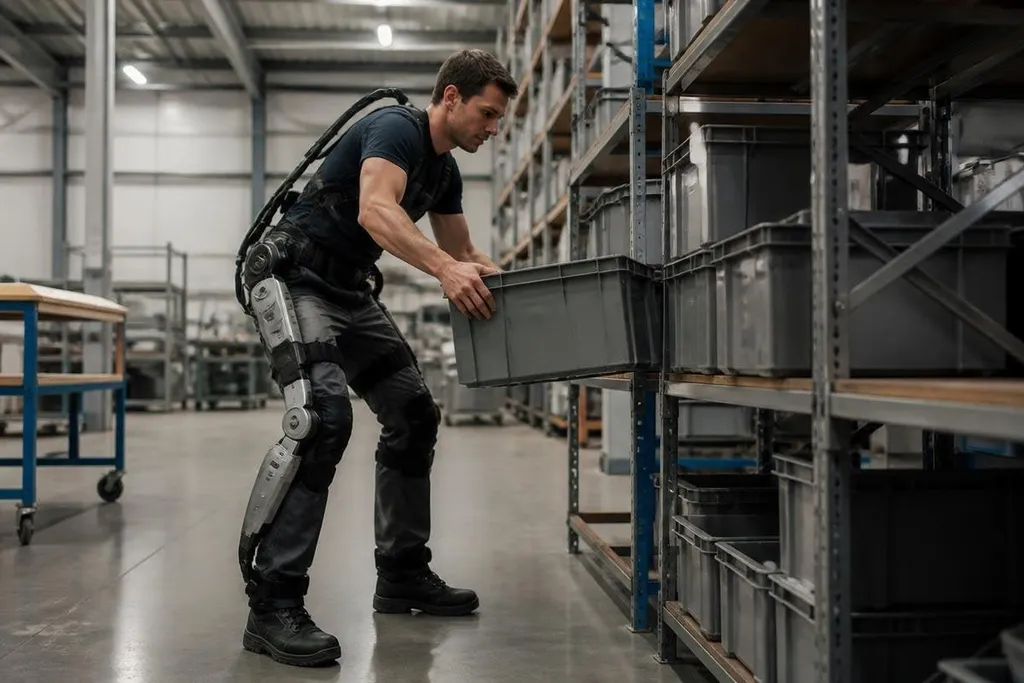
A robotic exoskeleton only becomes a business when it helps someone complete a paid task with less strain, fewer delays, or lower injury risk. The device may be impressive in a demonstration, but the buyer will measure the result against a job, a shift, and a budget.
This creates several possible paths for companies building, selling, or servicing exoskeletons. It also sets a high bar: without a named product, price, trial result, or buyer, claims about market size remain guesses.
- Task first: sell help for a defined movement, not a general promise.
- Buyer matters: the person wearing the device may not approve the purchase.
- Service counts: fitting, training, repairs, and data may shape the deal.
Where the business case starts
The clearest opening is a job with repeated physical effort. A worker may lift, hold, bend, reach, or carry through much of a shift. An exoskeleton could reduce the load on a specific body area, but the maker must show how that changes the work.
That proof needs a narrow test. A company could compare the same task with and without the device, then record time, movement quality, worker comfort, and stoppages. The test should also check whether the exoskeleton slows other parts of the job.
This is where product teams can sell to factories, warehouses, construction firms, hospitals, or defense agencies. Each setting asks for a different design. A warehouse may care about walking and shelf access, while a factory may care more about holding a tool in one position.
The business opportunity sits in that fit between body movement and work process. A device built for one task may have a clearer sales case than a general system that claims to help with everything.
Four ways companies can earn revenue
Hardware sales are the most visible route, but they are only one option. Companies can also charge for the work needed to make the device usable at a site.
A maker may sell the exoskeleton outright to a buyer. That model suits buyers who want control of the equipment and have staff who can manage training, storage, and repairs.
A rental or service plan lowers the first payment. The supplier keeps ownership and charges for use, maintenance, fitting, or replacement parts. This can help a buyer test the device before making a larger purchase, provided the contract states who pays when the equipment sits unused.
Integration work is another route. A supplier may help a site change task layouts, safety rules, training plans, or work instructions around the device.
That work costs money, but it also exposes a hard limit: an exoskeleton can support a worker without fixing a badly designed process.
Data services may have a role too. A connected device can record usage, faults, or movement data. Any company selling this service needs clear rules for ownership, worker privacy, access, and storage before a buyer signs.
Worker movement records can become part of the sales package. A buyer needs to know what the exoskeleton stores, who can access it, and what happens when support ends. Robot24 can put the machine, company, and work setting beside those claims before you test the limits buyers will face.
The limits buyers will test
Fit is a business problem, not a small detail. Workers differ in height, strength, movement, clothing, and daily tasks. A device that works for one person may need a different setup for another.
The exoskeleton also has to work around the job. Workers may need to climb, sit, turn in narrow spaces, use tools, or leave the task quickly. Extra weight, charging time, heat, noise, and cleaning can reduce use even when the device supports the target movement.
Safety adds another layer. A buyer needs clear instructions for startup, shutdown, faults, falls, battery handling, and emergency removal. Training must reach every person who will wear or supervise the device, not only the staff present during a sales trial.
I’d start with a paid pilot tied to one task and one buyer’s measure of success. A broad rollout before that proof is in place puts the hardware ahead of the business case.
A buyer's checklist
Use these questions before signing a purchase, rental, or service deal:
- Name the task: Which movement does the device support, and how often does it occur?
- Set the measure: Will the site track time, stoppages, comfort, injuries, or another agreed result?
- Test the whole shift: Can workers wear it through the full task without heat, fit, or charging problems?
- Assign the work: Who handles fitting, training, cleaning, repairs, and battery storage?
- Read the data terms: Who owns recorded movement data, and how long does the supplier keep it?
- Plan the exit: What happens if workers stop using the device or the pilot misses its target?
The next business step is clear: match one exoskeleton to one repeated task, set a recorded target, and price the support around that test. If the device cannot show a useful result under normal work conditions, a larger sales pitch will not fix the gap.