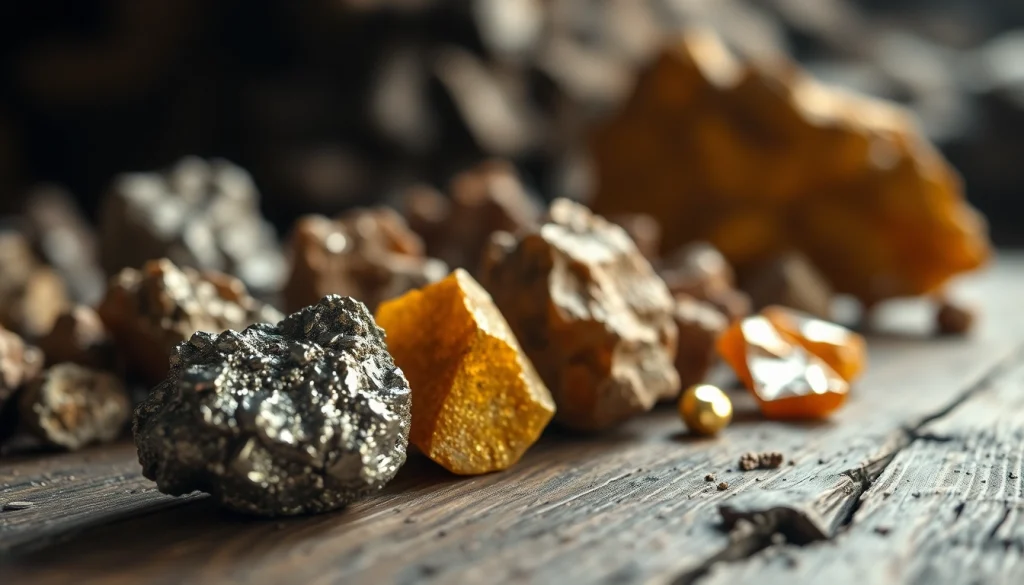
Introduction to Ore
Ore is a fundamental concept in geology and mining, referring to naturally occurring minerals that contain valuable metals or other resources in sufficient concentrations to be economically extracted. Its importance lies not just in its mineral wealth but also in its role as the backbone of various industries that rely on extracted metals for production and technological advances. Understanding Ore is vital for comprehending the dynamics of resource management and the global economy.
Definition and Importance of Ore
At its core, ore is defined as a natural aggregate of one or more minerals from which valuable substances can be extracted. These valuable substances typically include metals such as gold, silver, copper, iron, and aluminum, or non-metallic minerals like gypsum and halite. The economic viability of extracting ore depends on the concentration of these valuable elements within the rock. Understanding ore is crucial to various sectors, from construction to technology, as many industries depend on mined metals and materials.
Historical Context of Ore Mining
The history of mining ore dates back thousands of years, with evidence of ancient civilizations utilizing metals for tools, jewelry, and currency. The oldest recorded mining operations were in the Anatolian region, where the Romans extensively mined ores for copper and gold. As societies progressed, so did mining techniques, shifting from manual extraction to more advanced and mechanized processes. The Industrial Revolution marked a significant turning point, as the demand for metals surged, prompting innovations in mining and ore processing techniques.
Types of Ore Deposits
Ore deposits can be categorized based on their formation processes, geographical distribution, and the types of minerals present. Key types of ore deposits include:
- Magmatic Deposits: Formed from cooling magma, these deposits contain minerals such as nickel, copper, and platinum.
- Hydrothermal Deposits: Resulting from heated water circulating through rocks, they often carry metals like silver and gold.
- Sedimentary Deposits: These are formed through sedimentation and include iron and phosphate ores.
- Metamorphic Deposits: Developed from metamorphic processes, typically containing minerals like talc and graphite.
Types of Ore and Their Characteristics
Metallic Ores
Metallic ores are those that contain metals in appreciable amounts. They are typically heavy, have a high specific gravity, and are opaque. Examples include:
- Iron Ore: Mainly found as hematite or magnetite, iron ore is essential for steel production.
- Copper Ore: Contains minerals like chalcopyrite, essential for electrical components.
- Gold Ore: Often found in quartz veins, gold is highly sought after for jewelry and as an investment.
Non-Metallic Ores
Non-metallic ores do not contain metals but are still valuable for their derived products. Common non-metallic ores include:
- Limestone: Used primarily in construction and cement production.
- Clay: Essential for ceramics, bricks, and pottery.
- Salt: Mined from deposits known as halite, primarily used for food and chemical applications.
Rare and Precious Ores
Rare and precious ores contain elements that are less abundant and often more valuable. This category includes:
- Uranium Ore: Essential for nuclear energy production.
- Platinum Group Metals: Include platinum, palladium, and rhodium, critical in industrial applications like catalytic converters.
- Tantalum Ore: Vital for electronic components.
Mining and Extraction Techniques for Ore
Common Mining Methods
Mining techniques vary based on the type of ore, the location, and depth of the deposits. Common methods include:
- Open Pit Mining: A surface mining technique used when ore deposits are located near the surface.
- Underground Mining: Employed when ore deposits are deeper underground; this method involves tunneling.
- Placer Mining: A technique used to extract valuable minerals from alluvial deposits by washing away unwanted material.
Processing Ore for Use
The processing of ore typically involves several stages to extract the valuable minerals. Key steps include:
- Crushing and Grinding: Reducing ore size to liberate valuable minerals.
- Concentration: Separating valuable minerals from the gangue through methods like flotation or magnetic separation.
- Smelting: Extracting metal from its ore by heating and melting.
Environmental Impact of Ore Mining
Mining has considerable environmental implications, including habitat destruction, soil erosion, and water pollution. Mitigating these impacts is essential. Strategies include:
- Rehabilitation: Restoring mined land to its natural state.
- Water Treatment: Ensuring that water used in mining processes does not contaminate local water sources.
- Reducing Waste: Implementing technologies to minimize waste generated during extraction and processing.
Economic Significance of Ore
Global Demand and Supply of Ore
The demand for ore is driven by several industries, including construction, technology, and energy. Global events, economic growth, and technological advancements can significantly influence supply and demand dynamics. Some of the factors affecting this include:
- Global economic growth increases the demand for metals.
- Technological advancements lead to new mining and processing methods.
- Supply chain disruptions due to geopolitical issues.
Ore as a Commodity in Trade
Ore plays a vital role in international trade. The trade of various ores can be influenced by tariffs, trade agreements, and global supply chains. Some notable points include:
- Global commodities markets dictate ore pricing based on supply and demand.
- Countries with rich mineral resources often export ores, impacting economic stability.
- Strategic partnerships can enhance mining efficiency and export potential.
The Future of Ore and Resource Management
As the world moves towards green technologies and sustainable practices, the future of ore extraction and processing will adapt accordingly. Innovations like recycling metals, developing alternative materials, and improving mining techniques will shape the landscape. Awareness of sustainable practices is essential for minimizing environmental impacts and ensuring resource availability for future generations.
FAQs about Ore
What are the main uses of Ore?
Ore is primarily used to extract metals for industrial purposes, including construction, manufacturing, and technology. Different ores supply essential materials for various applications.
How does Ore differ from minerals?
Ore refers specifically to rock that contains valuable minerals in sufficient quantities to be mined profitably. It emphasizes economic viability over mere existence.
What are the four main types of Ore?
The four main types of Ore are sulfide ores, oxide ores, carbonate ores, and halide ores, with each having distinct mineral compositions and extraction processes.
What is the process of Ore extraction?
Ore extraction typically involves mining, followed by crushing, milling, and chemical treatment to separate valuable minerals while minimizing environmental impact.
How is the quality of Ore determined?
The quality of Ore is assessed based on the concentration of valuable minerals present, known as the ore grade. Higher grades generally indicate more economically viable ore.