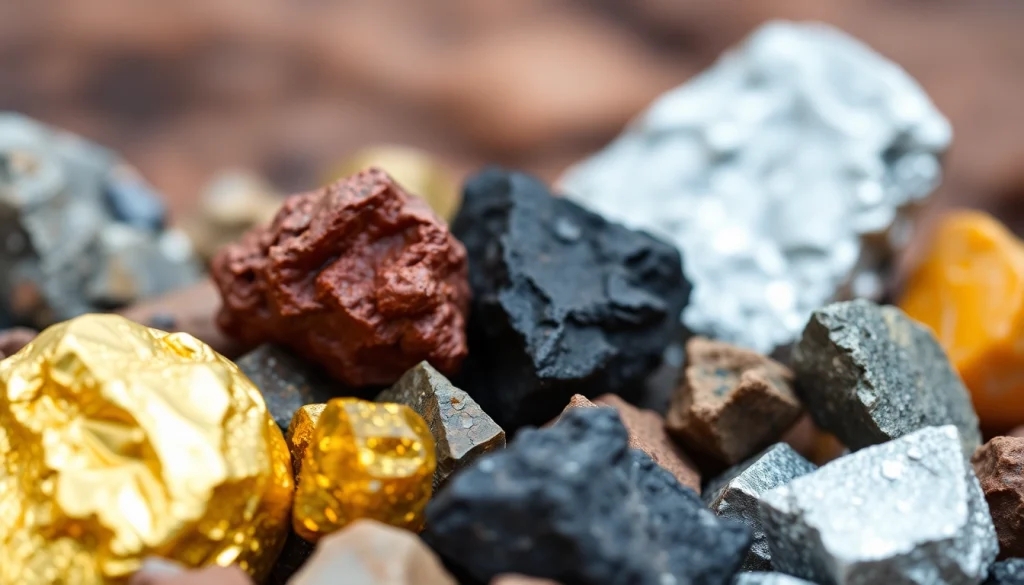
What is Ore?
Ore is a naturally occurring rock or sediment that encompasses one or more valuable minerals, typically including metals, which are concentrated above background levels. Understanding ore is crucial for both the mining industry and the broader economy as it represents a primary source of essential metals and minerals. Whether it is iron for construction, copper for electrical wiring, or gold for electronic components, ores are foundational to modern industry. The significance of Ore cannot be overstated.
Definition and Importance of Ore
Ore can be defined not only as a collection of minerals with economic value but also as a reservoir from which elements and compounds can be extracted for societal consumption. The extraction and processing of ores support countless industries including construction, manufacturing, and technology. As a result, the role of ores becomes even more pronounced in discussions surrounding the economy, international trade, and resource sustainability.
Classification of Ore Types
Ores can be categorized based on various characteristics, including their chemical composition, the method by which they are formed, and their intended use. The two main categories are metallic and non-metallic ores. Within these categories, ores can further be subdivided into groups such as:
- Oxide Ores
- Sulphide Ores
- Carbonate Ores
- Halide Ores
Each type features distinct properties that determine its extraction and processing techniques, alongside varying economic viability.
Characteristics of Valuable Ores
Valuable ores generally exhibit certain characteristics that enhance their economic appeal. These attributes include:
- High Concentration: The ores must contain sufficient quantities of the desired minerals to justify mining costs.
- Accessibility: Easily accessible deposits are more likely to be mined due to lower operational costs.
- Purity: High-grade ores generally undergo less processing, which significantly lowers production costs and increases profitability.
Understanding these characteristics aids mining companies in assessing the feasibility of an ore deposit.
Types of Ores
Metallic Ores and Their Applications
Metallic ores are those that contain metal minerals. These ores are vital for various applications, including:
- Iron Ore: Essential for steel production, which is foundational for construction and manufacturing.
- Copper Ore: Key for electrical wiring and electronic components.
- Aluminum Ore (Bauxite): Used primarily in the production of aluminum metal, pivotal in numerous sectors such as transportation and packaging.
The applications of these ores extend beyond mere production; the metals derived improve technological advancement and urban development processes.
Non-metallic Ores Explained
Non-metallic ores consist of naturally occurring minerals that do not provide substantial yield in terms of metals. Examples include:
- Industrial Minerals: Such as quartz and talc, used in construction and manufacturing.
- Fertilizer Minerals: Such as phosphate and potash, crucial for agriculture.
- Gemstones: Like diamonds and emeralds, valuable in the jewelry sector.
These ores play critical roles in multiple industries, demonstrating the diversity of applications linked to mineral extraction.
Common Examples of Ores
Several specific ores are frequently utilized across industries, including:
- Hematite: An iron oxide used predominantly in steelmaking.
- Galena: A primary source of lead, used in batteries and shielding against radiation.
- Sphalerite: The principal ore for zinc, crucial in anti-corrosion coatings and galvanization.
These examples reflect the economic importance and utility of ore deposits globally.
Ore Mining Processes
Extraction Techniques for Ores
The extraction of ores from the earth involves various techniques depending on the ore’s location, depth, and type. Common extraction methods include:
- Open-Pit Mining: Suitable for shallow, horizontal ore bodies.
- Underground Mining: Employed for deeper ore deposits, requiring advanced techniques for safety and efficiency.
- Placer Mining: Involves extracting minerals from alluvial deposits, often using water to separate valuable minerals from earth.
Understanding these methods can optimize extraction processes and increase the profitability of mining operations.
Processing and Refinement of Ores
Once extracted, ores must be processed to separate valuable minerals from the waste material. The processing phases typically involve:
- Crushing and Grinding: Reducing ore to smaller particles for better accessibility of minerals.
- Concentration: Utilizing methods such as flotation or magnetic separation to isolate valuable components.
- Smelting and Refining: Converting concentrated ores into pure metals through high-temperature processes.
The efficiency of these processes greatly influences the overall yield and economic viability of mining ventures.
Safety Measures in Ore Mining
Mining operations pose inherent risks, making safety measures critically important. Key safety protocols include:
- Personal Protective Equipment (PPE): Essential for workers to prevent injury from equipment and environmental hazards.
- Monitoring of Air Quality: Regular checks to prevent exposure to harmful dust and gases.
- Emergency Protocols: Comprehensive plans and drills to prepare for accidents or unplanned events.
Implementing stringent safety measures not only protects workers but also ensures compliance with regulatory standards, enhancing the company’s reputation.
The Economic Impact of Ore
Ores in Global Markets
The economic importance of ores cannot be overstated, as they significantly contribute to a nation’s wealth. Commodities such as iron ore, copper, and precious metals are traded globally, and fluctuations in their prices can impact entire economies. Countries primarily reliant on mining may derive substantial portions of their GDP from these resources.
Job Creation in the Mining Sector
Mining not only generates revenue for governments but also provides thousands of jobs, from excavation to processing. Local communities can benefit greatly from employment opportunities, skill development programs, and secondary business growth related to mining activities. Nevertheless, it is critical for mining companies to promote sustainable practices to ensure long-term community benefits.
Environmental Considerations
The mining industry is under increasing scrutiny for its environmental impact. Responsible mining involves:
- Minimizing land disturbance and habitat destruction through careful planning.
- Implementing effective waste management strategies.
- Restoration of mined sites to reduce long-term environmental impacts.
By adopting environmentally responsible practices, companies can mitigate negative consequences while remaining economically viable.
Future Trends in Ore Mining
Technological Advances in Ore Extraction
The future of ore mining is closely tied to technological innovations. Advances in automation, artificial intelligence, and remote sensing enhance operational efficiency and safety. These technologies enable better resource identification, optimize extraction processes, and reduce operational costs. The shift toward automation is transforming skill requirements and workforce dynamics in the mining sector.
Sustainable Practices in Ore Mining
As sustainability becomes paramount, mining companies are increasingly adopting eco-friendly practices. These include:
- Recycling materials to reduce demand for raw ores.
- Investing in renewable energy sources to power operations.
- Engaging with local communities to ensure equitable resource development.
These practices not only enhance operational sustainability but also align with public expectations of corporate social responsibility.
Investing in Ore Resources
Investment in ores is crucial for nations looking to boost their economic stature. By focusing on the mining sector, economies can improve their trade balances while securing essential materials needed for technological growth. Investors are increasingly considering the long-term stability associated with resource-rich companies, prompting a shift in investment strategies that favor sustainability and responsible resource management.
Frequently Asked Questions About Ore
What are the 4 types of ores?
Ores can primarily be classified into four types: Oxides, Carbonates, Sulphides, and Halides. Each type has distinctive properties influencing extraction methods.
What is ore also known as?
Ore can also be referred to as a natural aggregation of minerals that can be mined and processed for profit.
What is the other meaning of ore?
A less common meaning refers to ‘öre,’ a minor unit of currency used in Sweden, representing 1/100 of a Swedish krona.
How is ore extracted?
Ore extraction involves various techniques, including open-pit mining, underground mining, and placer mining, depending on the deposit’s location and type.
Can all ores be recycled?
Many ores can be recycled, which helps reduce the demand for raw ores and minimizes environmental impacts related to mining and extraction.